
Arkansas Property Records
Arkansas property records are public documents that track ownership, liens, valuations, and land history across the state. Each of the 75 counties keeps its own records through the Circuit Clerk's office, which serves as the official county recorder under state law. You can search records online through statewide portals like ARCountyData.com and ActDataScout, or visit the courthouse in the county where the land sits. This guide covers where to find property records in Arkansas, how the system works, what documents are available, and how to get what you need from any of the state's 75 counties.
Arkansas Property Records Overview
How Arkansas Property Records Work
Three county offices handle most of the property record work in Arkansas. The Circuit Clerk acts as the ex-officio county recorder and files all property-related documents. The County Assessor determines the value of real and personal property for tax purposes. The County Collector handles property tax billing and payment. Together, these three offices maintain the full picture of property ownership and tax status in each county.
Property records in Arkansas are governed by Title 26 of the Arkansas Code, which covers taxation and property assessment throughout the state. Recording happens at the county level, meaning you go to the specific county where the land is located. The Arkansas Secretary of State plays a separate role, keeping Uniform Commercial Code (UCC) filings and business entity records at the state level. For most real estate records, the county Circuit Clerk is your starting point.
Most counties participate in free online search systems. The two main portals are ARCountyData.com and ActDataScout. Both let you search by owner name, parcel number, or address. You can check assessed values, ownership history, tax payment status, and more without calling the courthouse.
ARCountyData.com serves as the central free portal for county assessor and collector records, with counties across Arkansas sponsoring public access to their property data through this system.

Select your county to search real estate assessments, ownership history, and tax records at no cost through this widely used statewide resource.
Searching Arkansas Property Records Online
ActDataScout provides 24/7 access to Arkansas property records from computers, tablets, and mobile devices. The platform pulls real property records directly from county Assessor offices, covering ownership details, market and assessed values, taxes, land use, and ownership transfers. Land records from Circuit Clerk offices are also included, with plats, surveys, ledgers, and warranty deeds available for participating counties. You can search by name, property ID, physical address, or mailing address.
Many Arkansas counties use ActDataScout as their official online records portal. It is one of the most complete statewide resources for property research, and counties add their data regularly. Tax collection records and payment information from participating counties are also accessible through the platform. Personal property records from Assessor offices are available in select counties as well.
ActDataScout gives researchers around-the-clock access to Arkansas county property data, including assessments, tax records, and land records from participating counties throughout the state.
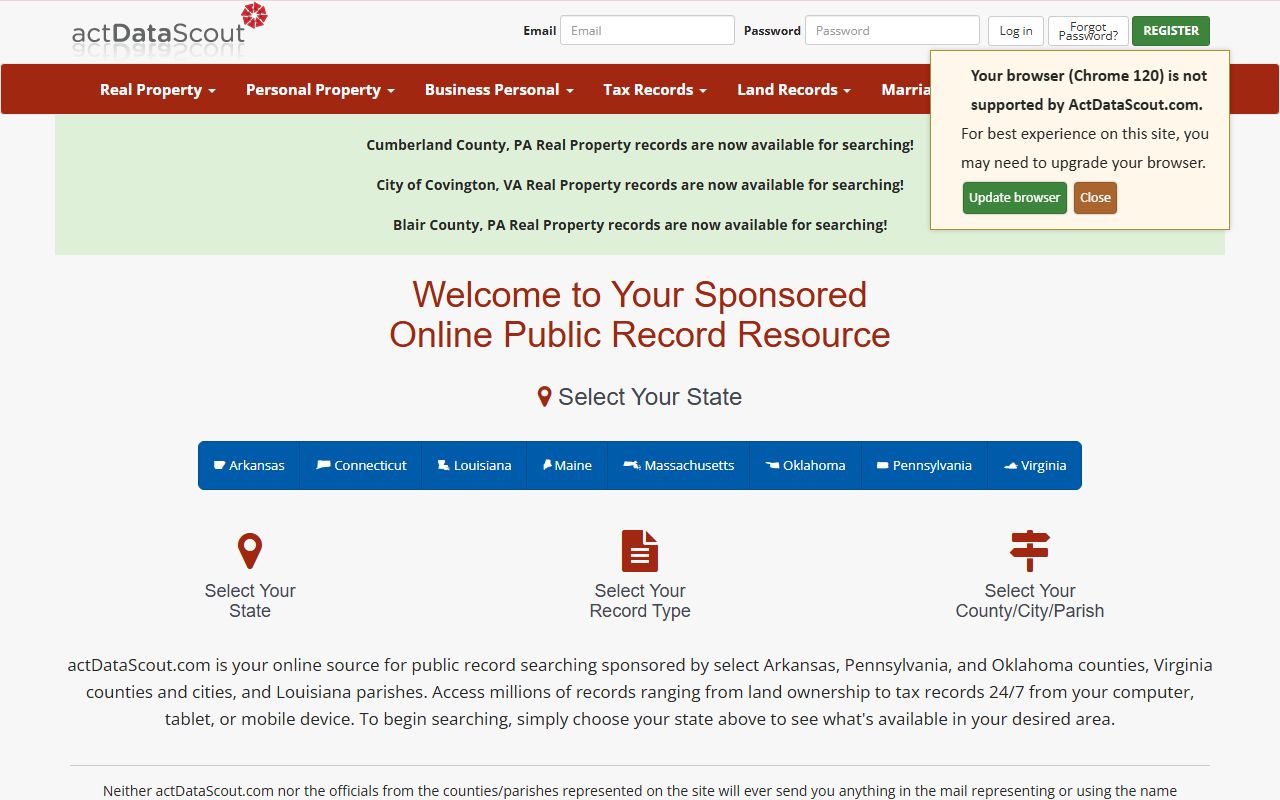
Search by owner name, address, or parcel number to pull property details across Arkansas counties in real time with no subscription required for basic searches.
NETR Online maintains a statewide directory of Arkansas property record resources. It includes contact information for county assessors, recorders, and tax collectors in every Arkansas county. The site links directly to official county property search portals. It is a good reference when you need the specific county office for a property and want to confirm current contact details before driving to the courthouse.
The CountyOffice.org Arkansas property records directory is another aggregator that compiles links to county assessor and collector offices, and notes that personal property in Arkansas must be assessed annually between January 1 and May 31, which can often be done online or by visiting the assessor's office in person.
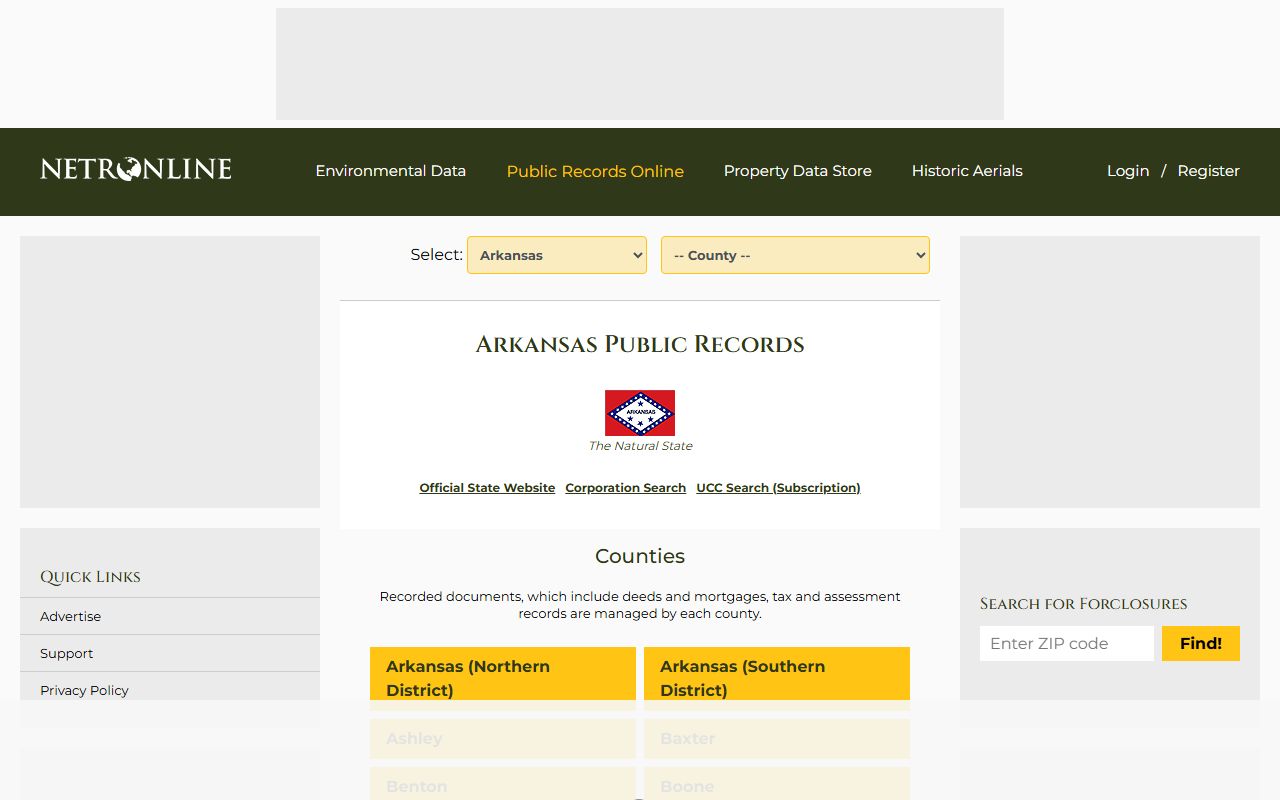
NETR Online lists every Arkansas county's assessor, recorder, and tax office with current contact details and direct links to available online property search systems.
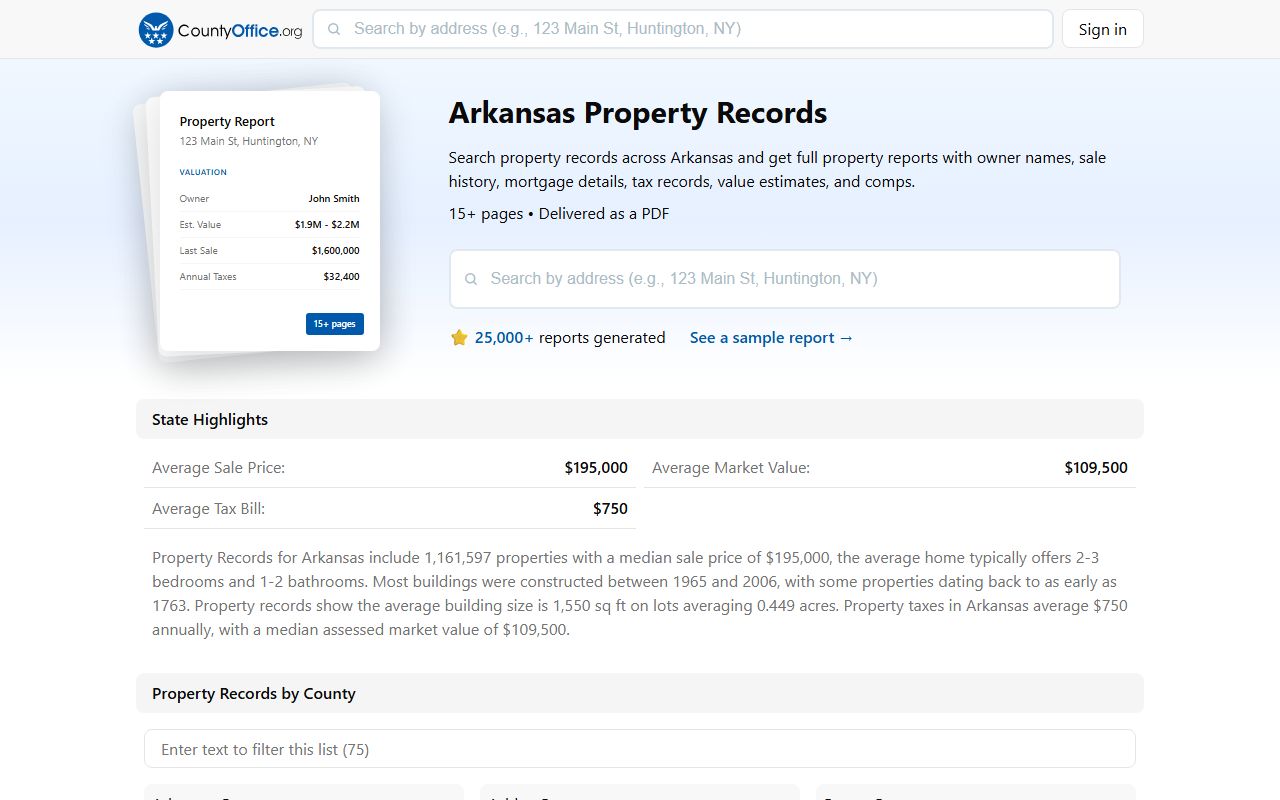
CountyOffice.org provides an easy entry point for finding the right county office when you know the city or area but are not sure which county handles the records.
Note: For full document images and certified copies, contact the Circuit Clerk's office directly or use their county-specific portal, as not all statewide systems include scanned document images.
Circuit Clerk Recording and Property Documents
The Circuit Clerk's office records all documents that affect real property in Arkansas. This includes warranty deeds, quitclaim deeds, mortgages and deeds of trust, releases, powers of attorney, plats and survey maps, mechanic's liens, federal tax liens, lis pendens notices, easements, and UCC fixture filings. Under state law, the Circuit Clerk is the ex-officio county recorder, so all filed documents become official public records once accepted by that office.
Recording fees in Arkansas are set by statute. The standard fee is $15 for the first page and $5 for each additional page. A Real Property Transfer Tax of $3.30 per $1,000 of actual consideration applies to real estate transfers exceeding $100. Certified copies cost $5.00 per document. Plain copies made by the customer run $0.25 per page, and copies made by the clerk's office cost $0.50 per page. Documents can be recorded in person, by mail, or electronically through approved eRecording vendors.
Electronic recording (eRecording) is available in many Arkansas counties. Approved national vendors include CSC eRecording Solutions, EPN eRecording Partners Network, Indecomm Global Services, and Simplifile. Documents must be originals bearing actual signatures. Faxed documents are not accepted for recording.
Starting August 5, 2025, under Act 752, any individual filing a deed must show a photo ID. Exemptions apply to licensed attorneys, real estate brokers, financial institution representatives, and government representatives. Many counties also offer a Property Fraud Alert program, which notifies you by email when a document with your name is recorded at no cost.
The Pulaski County Circuit Clerk Real Estate Department is a well-documented example of how county recording works in Arkansas, with records going back to 1819 and a full eRecording system in place.
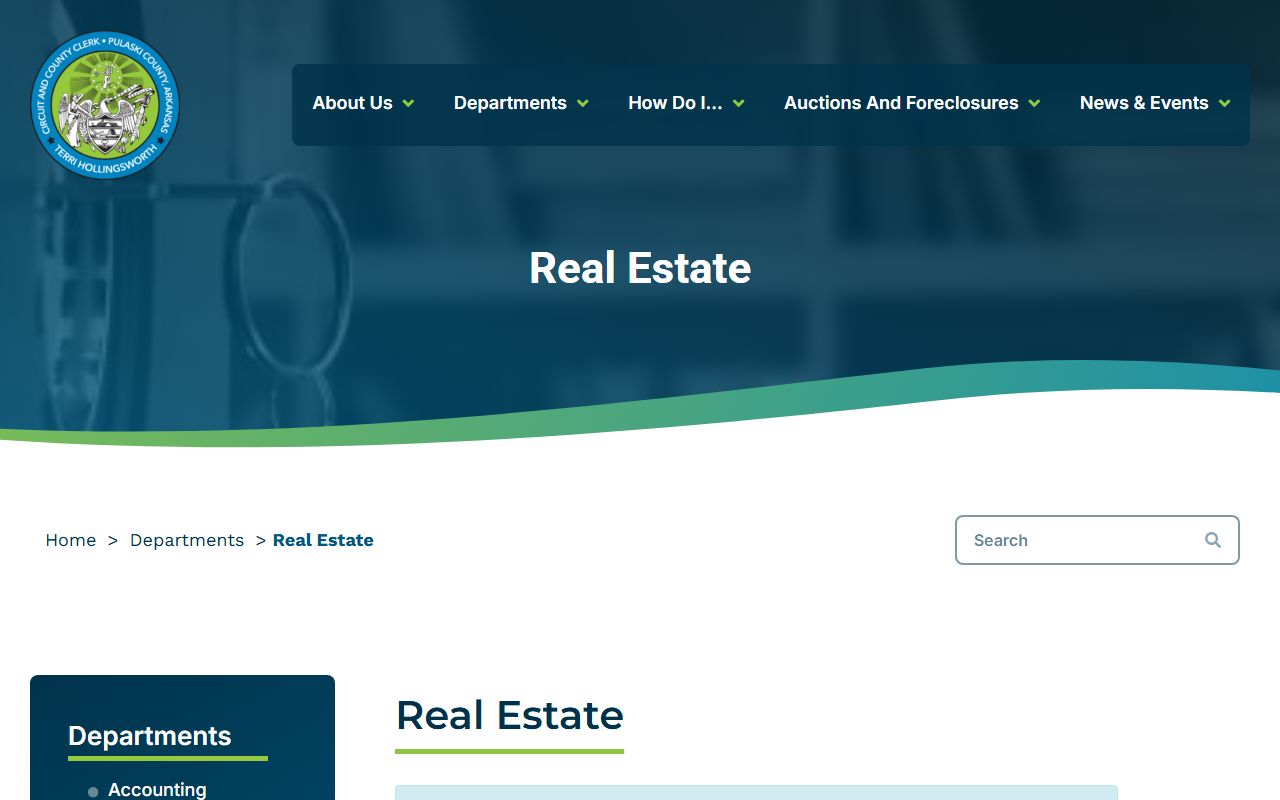
Records from 1994 to present are available online through the Pulaski County portal, with older documents accessible by appointment for in-person research.
The Clark County Circuit Clerk recording requirements page outlines the standard document requirements and fee schedule that apply across most Arkansas counties.
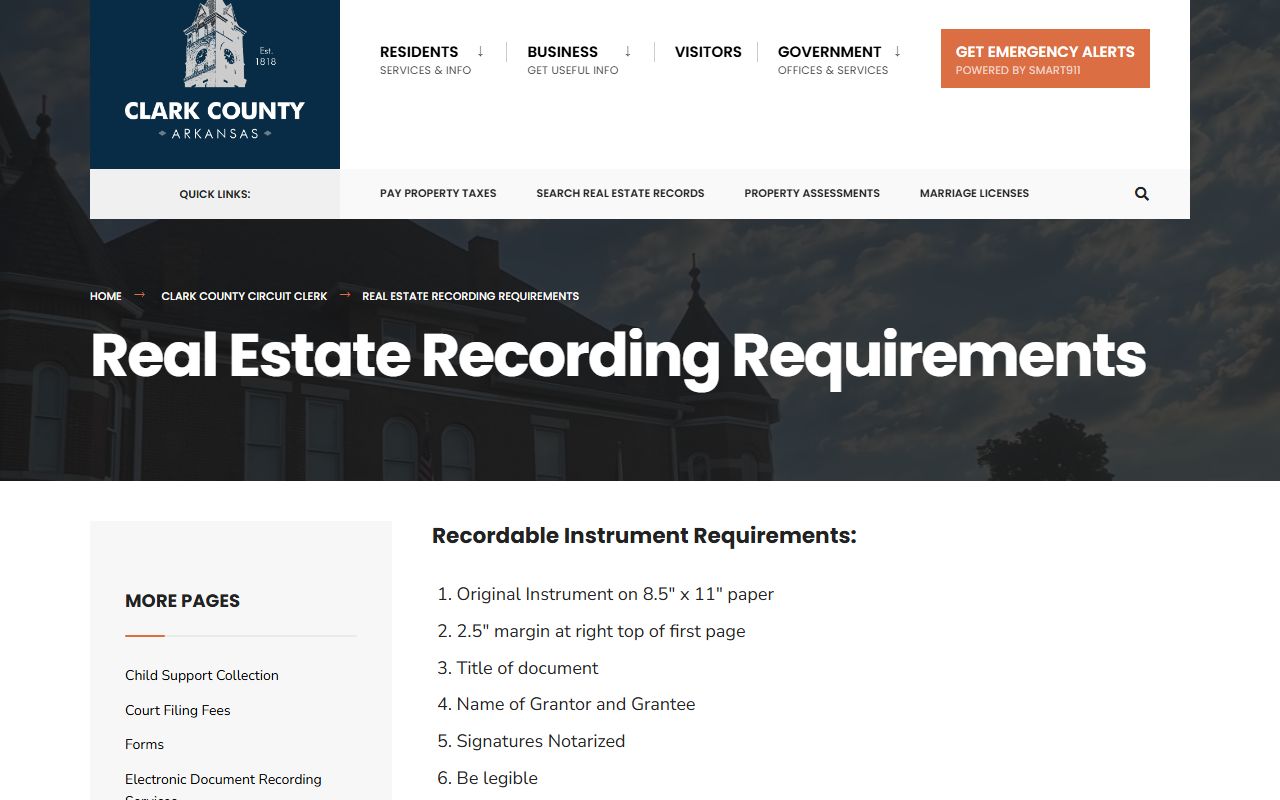
Common reasons for rejection include a missing legal description, incorrect fees, no notary seal, no "prepared by" statement, and missing Real Estate Transfer Declaration when required.
The Independence County Circuit Clerk describes the recorder role clearly: the clerk records all deeds, mortgages, maps and plats, powers of attorney, liens, financing statements, and public bonds under Arkansas Code Annotated 14-14-1301(2).

The Circuit Clerk maintains custody of all recorded instruments and is responsible for time-dating and indexing every document in the order it is received.
Property Assessment Across Arkansas
The County Assessor is responsible for finding, listing, and valuing all taxable property in their county. Real property is assessed as of January 1 each year. Personal property, which includes vehicles, equipment, and other moveable assets, must be assessed annually between January 1 and May 31. After May 31, a 10% penalty applies to any delinquent personal property assessment under Arkansas Code § 26-26-201.
Counties in Arkansas must conduct full reappraisals of all real property every four years. The County Assessor sends notice of any changes to real property assessments no later than 10 business days after July 1 of the assessment year. Under Arkansas Code § 26-26-1114, you can assess personal property by mail, telephone, through a county-affiliated website, or in person. When you assess by phone, the assessor must mail you a certification within five business days.
Amendment 79 of the Arkansas Constitution provides a homestead tax credit of up to $600 on property taxes for a principal place of residence. Homeowners who are 65 or older or totally disabled may qualify for a freeze on the taxable value of their home. Apply by October 15 each year. Both programs are administered through the County Assessor's office.
The Scott County Assessor's Office is a strong example of how the assessor role works in practice, including the legal duty to deliver assessment books to the county clerk by the statutory dates and stay current on all property transactions within the county.
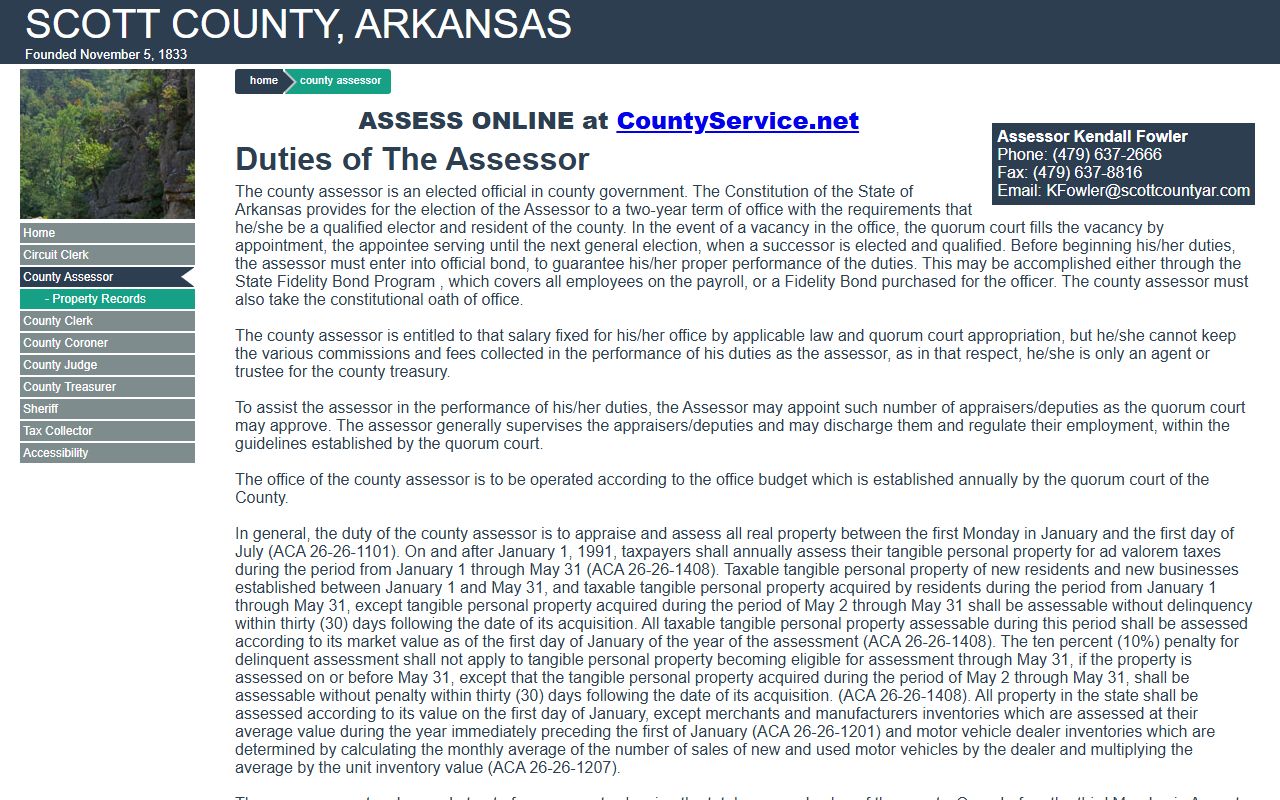
Assessors must maintain up-to-date appraisal records and make corrections using the proper pre-numbered triplicate forms under ACA 26-28-111.
Arkansas Property Laws and Statutes
Title 26 of the Arkansas Code is the main body of state law governing property taxation and assessment. Subtitle 3 covers the administration of local taxes. Chapter 26 covers the assessment of taxes specifically. The statutes define how assessors must value property, how taxes are calculated, the timeline for assessment and collection, and the penalties for noncompliance. Every county in Arkansas must follow these same rules.
Under the property tax system, three roles work together: the Tax Assessor sets rates and collects owed property tax, the Property Appraiser determines taxable value, and the Tax Collector issues yearly bills and collects payments. All taxes are due March 1 through October 15 of each year. Major credit cards are accepted online or at the counter in most counties. The County Collector, working with the sheriff if needed, can pursue delinquent taxes through the court system.
The Arkansas property tax statutes under Title 26 cover the full framework for how real and personal property is assessed, valued, billed, and collected across all 75 counties.
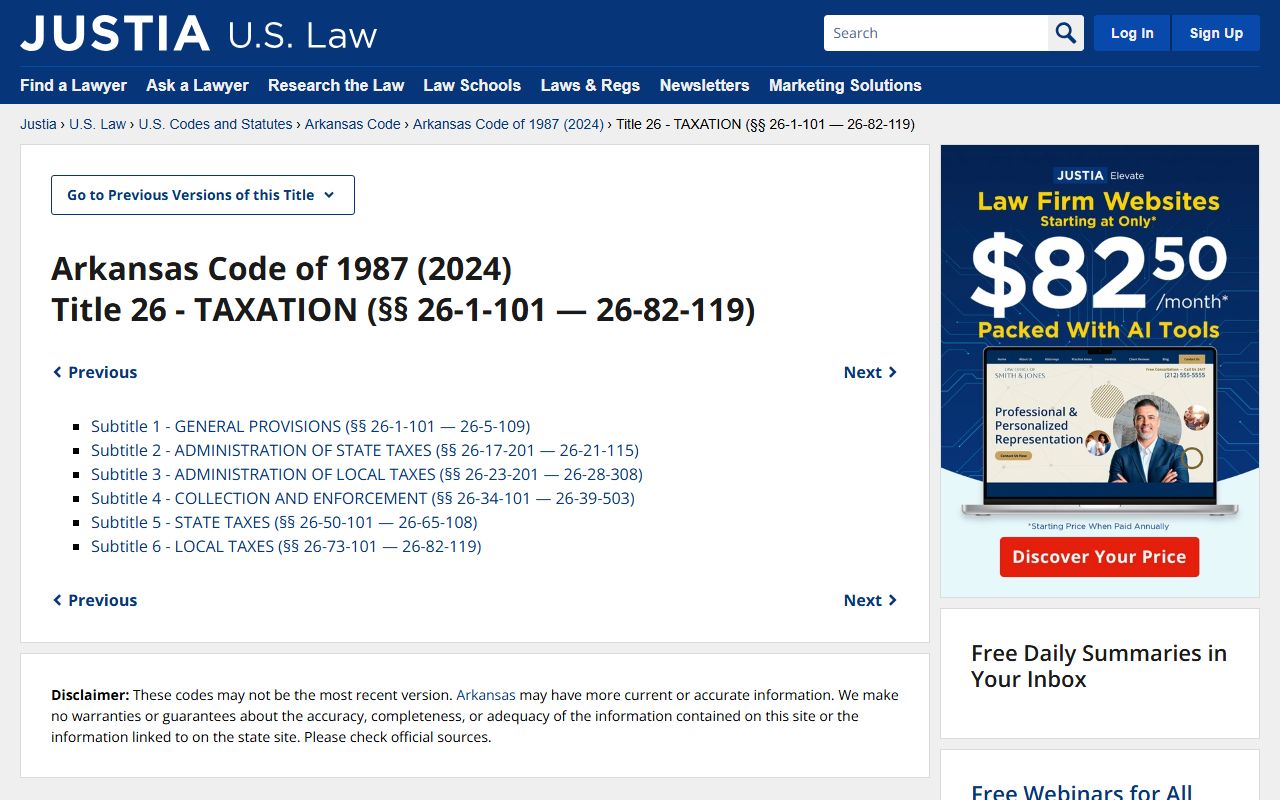
Title 26 defines the duties of assessors, collectors, and equalization boards, and sets the statewide rules that local offices must follow when administering property taxes.
Subchapter 11 of Chapter 26 addresses the assessment of property generally, including the methods, timing, and certification procedures for both real and personal property in Arkansas.
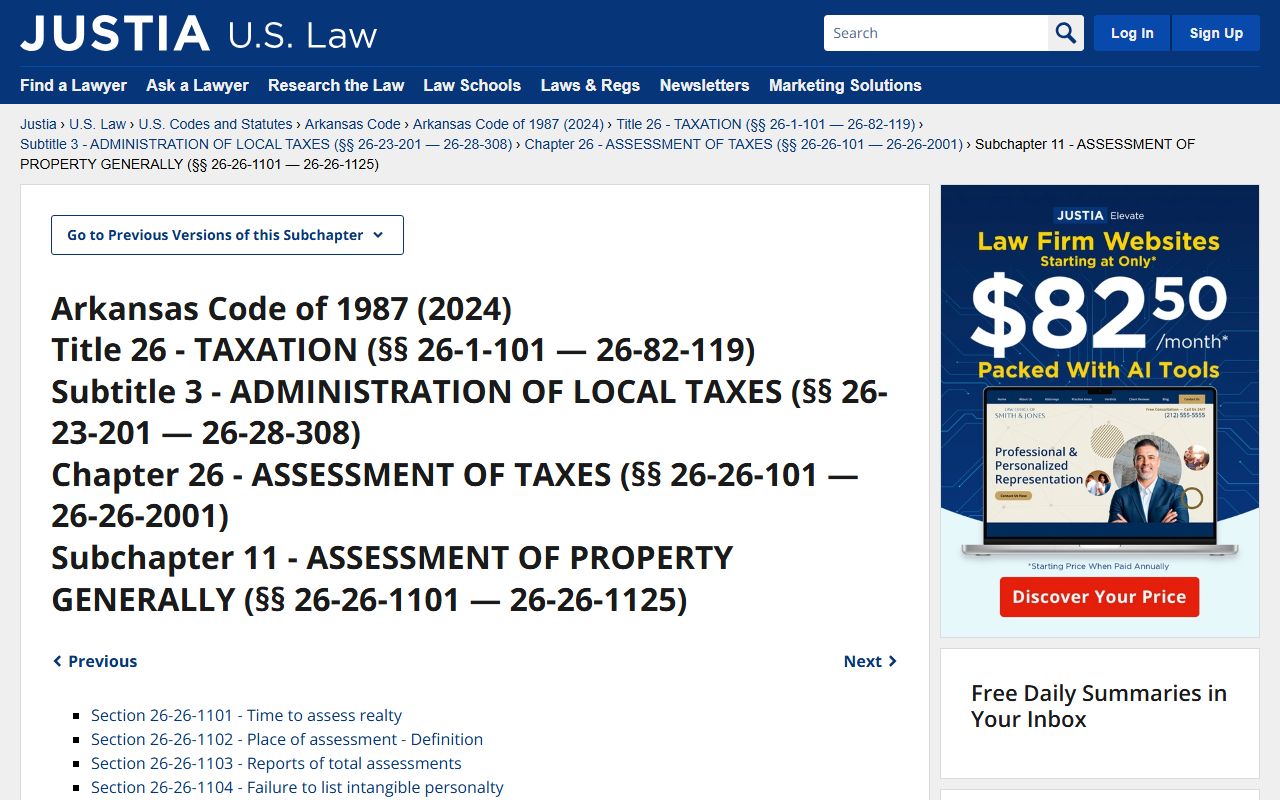
The Director of the Assessment Coordination Division issues rules under these statutes that apply uniformly to all counties, ensuring consistent assessment practices across Arkansas.
UCC Filings and Liens
The Arkansas Secretary of State maintains the central UCC filing system for Uniform Commercial Code liens and financing statements. Under Arkansas Code Annotated §§ 4-9-501, 4-9-510, and 4-9-525, agricultural liens and farm-related security interests must be filed with the Secretary of State. The UCC filing fee is $16. You can search UCC records online by debtor name, secured party name, or file number through the SOS website.
UCC-1 Financing Statements are valid for five years from the filing date. UCC-3 Amendments handle continuation, termination, or assignment of a prior filing. UCC-5 Statements of Claim are also maintained through this system. Federal tax liens are filed and indexed through the Secretary of State's Office as well. Act 942 of 2009 requires all agricultural liens and farm-related security interests to be filed at the state level, not at the county level. Electronic filing is available for faster processing.
The Arkansas Secretary of State serves as the central filing office for UCC liens, commercial instruments, and business entity registrations that can affect property title and ownership status.

The SOS provides certified copies of UCC records with the filing officer's statement and the official seal of Arkansas, which can be used in court proceedings as evidence.
Professional Property Research in Arkansas
Quest Research Inc. has provided public records research in Arkansas since 1983. The firm serves banks, law firms, title companies, mortgage companies, and research firms across the country. Their services cover UCC and corporate records at the Secretary of State, and property records, fixture filings, tax liens, judgments, and suits pending in all 75 Arkansas counties. Their researchers are deployed in counties throughout the state and can access records in person where online systems are limited.
For historical Arkansas property records, the Arkansas State Archives maintains county records on microfilm including historical deeds, land patents, and original entry records dating back to the 1830s. The archives serve as the repository for permanent county records no longer needed in courthouse offices. Researchers can access land patents from the Fayetteville and Harrison General Land Offices, historical plat books, and deed indices through this resource.
Quest Research Inc. offers professional search services for anyone who needs documented property research across Arkansas's 75 counties, with a track record serving major financial institutions and law firms since the early 1980s.

When courthouse access is limited or your search requires in-person retrieval of older documents, professional research firms can access records that are not yet available online.
Note: The Arkansas State Archives holds historical property records not yet digitized; for pre-1900 deed research, contact their office at 503 W 7th Street in Little Rock to schedule a microfilm research session.
Browse Arkansas Property Records by County
Each of Arkansas's 75 counties has its own Circuit Clerk that records deeds and property documents. Pick a county below to find local contact info, online search portals, recording fees, and resources for property records in that area.
Property Records in Major Arkansas Cities
Property records for Arkansas cities are held by the county where the city is located. Pick a city below to find the county recorder's office, online search tools, and local resources for property records in that area.